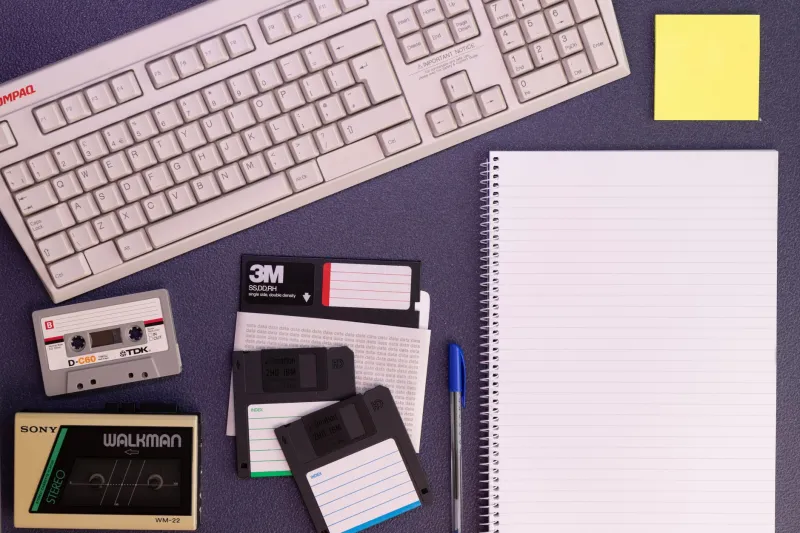
Sitting on Gold: The Ordinary People Who Accidentally Became Keepers of Digital History
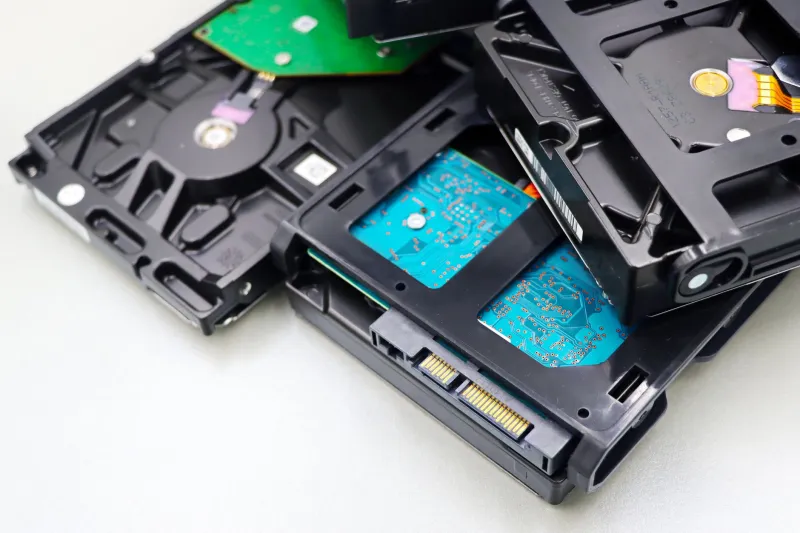
Mike Tasker didn't think much of the folder he'd been dragging from computer to computer since 2003. It had shareware games, old screen savers, a handful of Windows 98 utilities he barely remembered downloading. He'd kept them the way most of us keep stuff — out of mild laziness and a vague sense that deleting things felt permanent in a bad way.
Then someone in an online community told him one of those utilities hadn't been seen on the internet in over fifteen years.
"I didn't even know what I had," he told us. "I just never deleted it."
Mike's not alone. Across file-sharing communities, forums, and platforms like FileChan, a quiet and completely uncoordinated preservation movement is happening. Regular people — hobbyists, pack rats, nostalgic twentysomethings and fiftysomethings alike — are sitting on digital artifacts that, in some cases, no institution ever thought to save.
How Digital Culture Gets Lost (And Who's Actually Finding It)
The internet has a memory problem. For all its permanence, digital content disappears at a startling rate. Software companies go under and pull their downloads. Platforms shut down without warning. Websites that hosted files for years vanish overnight, taking decades of uploads with them. The Internet Archive does heroic work, but it can't catch everything — and it never could.
What fills that gap? Often, it's just people. People who downloaded something in 2001 because it looked interesting. People who burned CD-ROMs of shareware collections. People who zipped up an entire forum's worth of attachments before the site went dark, just in case.
Digital preservation researcher and independent historian Carla Voss has spent years documenting what she calls "accidental archives" — collections of culturally significant files held by private individuals who had no intention of being archivists.
"The institutional model of preservation assumes someone made a conscious decision to save something," she explains. "But a huge percentage of what we actually have from early digital culture survived because some random person on a dial-up connection thought it was cool and kept it around."
The irony is that decentralized file-sharing — the same ecosystem that's spent decades being accused of chaos and lawlessness — turns out to be one of the most resilient preservation systems ever built.
The Stuff People Are Actually Sitting On
So what kinds of things are we talking about? The range is wider than you'd expect.
There are the obvious ones: old software, video game ROMs, vintage fonts, early web design templates. But dig into the communities where this stuff surfaces and you find weirder, richer material. Corporate training videos from the '80s that capture entire lost workplace cultures. Obscure regional music that never made it to streaming platforms. Early Flash animations that predate YouTube. Digitized local TV commercials. Beta builds of software that shipped differently — or never shipped at all.
One user on a retro computing forum recently posted a complete set of installation disks for a word processor that was only sold in the southeastern US for about eighteen months in the early '90s. He'd bought the software at a garage sale as a teenager and never opened the box. The disks still worked.
"Nobody knew this thing even existed in digital form," he wrote. "Now it does."
Why File-Sharing Communities Are Doing What Libraries Couldn't
This isn't a knock on libraries or archives — they operate under real constraints. Budget limitations, legal gray areas around copyright, and the sheer volume of digital material that gets produced every year make comprehensive institutional preservation basically impossible.
File-sharing communities operate differently. They're distributed, they're motivated by genuine enthusiasm rather than mandate, and they've developed their own informal norms around preservation. On platforms built around sharing, the act of uploading something rare is its own kind of cultural currency. People want to be the one who found the thing nobody else has.
That social incentive does something that institutional preservation often struggles to replicate: it makes people actively look for gaps.
"There's a whole community of people who specifically hunt for 'lost' software or media," says Voss. "They treat it like a puzzle. And when they find something, the first instinct is to share it — to make sure it can't disappear again."
FileChan and communities like it function, in this sense, as something between a flea market and a museum basement. Messy, yes. Inconsistently labeled, absolutely. But alive in a way that a formally curated digital archive often isn't.
The Problem Nobody Wants to Talk About
Here's where it gets complicated. A lot of this material exists in a legal gray zone that makes formal institutions nervous. Orphaned software — programs whose original publishers no longer exist — technically still has copyright holders, even if no one knows who they are. Same goes for digitized media, old games, and plenty of other categories of preserved content.
This is exactly why so much of this material only exists in file-sharing communities. The legal risk of hosting it formally is too high for libraries and archives to take on without explicit permission that often can't be obtained because there's nobody left to give it.
For the accidental archivists themselves, the calculus is simpler: either someone keeps this stuff alive, or it's gone. Most of them have made their peace with that.
"I'm not making money off any of this," says one collector who's spent years assembling a library of early internet-era software. "I'm not even sure anyone's downloading most of it. But if someone needs it in ten years, it'll be there."
What You Might Be Holding Without Knowing It
If you've been online for more than a decade and you've held onto your old files, there's a real chance you have something nobody else does. That's not hyperbole — it's just math. The longer something's been around and the more platforms have come and gone, the smaller the pool of surviving copies gets.
A few things worth doing if you want to find out:
Search before you delete. Before clearing out old drives, run filenames through archive databases. Tools like the Internet Archive's software library or dedicated retro software communities can help you figure out whether something is already well-preserved or genuinely rare.
Share what you've got. If you find something that's hard to locate elsewhere, upload it. Communities built around this stuff will know what to do with it. The whole point of a platform like FileChan is that files move — they find the people who need them.
Document what you know. Context matters. A piece of software is more valuable to future historians if someone remembers where it came from, when it was downloaded, and what it was used for. Even a text file with basic notes attached to an upload makes a difference.
The Archive That Built Itself
There's something kind of beautiful about the fact that digital preservation, at scale, has largely happened by accident. No committee planned it. No institution funded it. It emerged from millions of individual decisions — to keep a file, to share it, to download something weird just because it seemed interesting.
The decentralized nature of file-sharing, which has always made it difficult to control, turns out to be exactly what makes it so good at keeping things alive. When a file exists in a hundred places at once, it's very hard to erase.
Mike Tasker eventually uploaded his old utility collection to a retro software community. Within a week, someone had documented three programs that had been considered lost. He's still not totally sure what he had.
"I just kept the stuff," he says. "Turns out that was enough."