Formats Under Fire: The File Types Being Quietly Pushed Off the Internet
Here's something that doesn't get talked about enough in file-sharing circles: formats don't always disappear because they stopped working. Sometimes they disappear because a platform decided they were a problem.
Not a technical problem. A business problem.
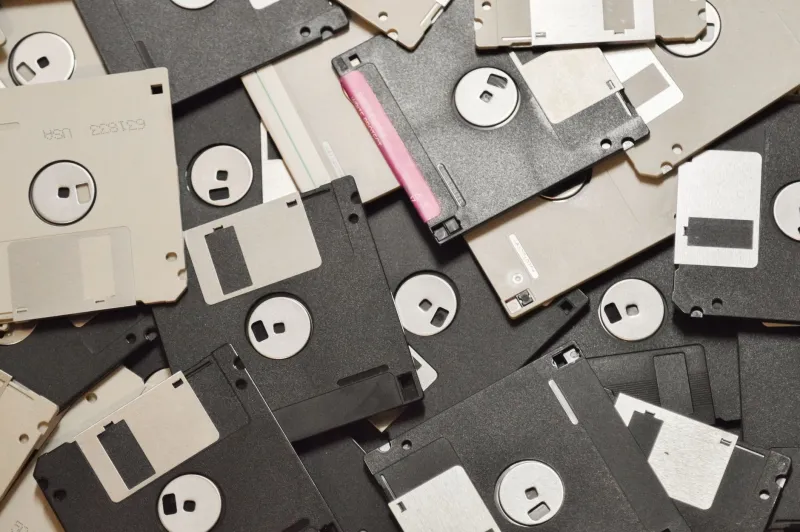
That's a pretty important distinction, and it's one that archivists, open-source advocates, and a whole lot of frustrated power users are increasingly furious about. The conversation usually gets buried under talk of "natural obsolescence" — the idea that formats just age out, like VHS tapes or floppy disks. But what's happening to several perfectly functional formats right now has almost nothing to do with technical failure. It looks a lot more like a managed exit.
The Difference Between Dying and Being Killed
Let's start with WebM. Google developed it, open-sourced it, and for a while it looked like the future of web video — royalty-free, efficient, widely supported. Then YouTube, also owned by Google, started quietly deprioritizing it in favor of formats that served its own infrastructure goals better. The format didn't get worse. The corporate calculus just shifted.
Or take FLAC. Lossless audio, completely open, technically superior to MP3 in every measurable way when audio fidelity matters. Streaming platforms support it — barely. Apple dragged its feet for years before adding FLAC support to Apple Music. Spotify still doesn't offer it. The format works great. It's just not convenient for platforms whose entire model depends on you not caring too much about audio quality.
"There's a pattern here that I've watched repeat itself for two decades," says one digital archivist who works with a university library system in the Midwest and asked not to be named because of ongoing institutional relationships. "A format gets good enough to threaten something proprietary, and then suddenly there are 'compatibility issues,' or the platform just stops surfacing it. It's not a conspiracy — it's just how platform incentives work."
The Formats That Are Actively Struggling Right Now
Beyond the big names, there's a longer list of formats that are quietly getting squeezed.
OGG Vorbis was supposed to be the open-source answer to MP3. It's still technically solid. But try uploading an OGG file to most consumer platforms today and see how far you get. Support has been pulled or never added by major services that had every technical ability to include it. The format works fine. The ecosystem just decided not to care.
EPUB is another interesting case. The open e-book standard is still widely used, but Amazon's refusal to natively support it on Kindle devices for years — pushing users toward its proprietary MOBI and AZW formats instead — did real damage to its adoption curve. Amazon eventually caved in 2022 and added EPUB support, but only after the proprietary formats had already cemented their hold on millions of users.
SVG for certain use cases gets quietly compressed or converted to raster formats by platforms that find vector files harder to moderate and thumbnail. The format survives in developer contexts, but the casual sharing ecosystem has largely trained users away from it.
And then there are the niche document formats — things like OpenDocument Format (ODF), the open standard that LibreOffice uses. Despite being an ISO-certified international standard, ODF files get converted, mangled, or flagged as suspicious by platforms that have built their entire workflow around Microsoft's DOCX ecosystem. The format is technically fine. The network effects just keep working against it.
Why Platforms Do This (And Why They Won't Admit It)
Ask any major platform why they don't support a given format and you'll get some version of the same answer: security concerns, infrastructure costs, user demand, compatibility complexity. These reasons aren't always wrong. But they're also never the whole story.
Formats that are open-source and royalty-free don't generate licensing revenue. Formats that preserve quality too well make compression-heavy streaming economics look bad. Formats that are genuinely portable make it harder to keep users locked into a specific ecosystem.
"Platforms benefit from format fragmentation," says an independent developer who contributes to open codec projects and has been vocal about this issue in developer forums. "If you can only play your files in their app, or if converting them is a pain, you stay. That's not a bug in the system — it's a feature."
This is where the file-sharing community has a role that goes beyond just moving data around. Communities that actively support and circulate a wide range of formats — including the inconvenient ones — are doing something that matters for the long-term health of the digital ecosystem.
The People Trying to Hold the Line
The Internet Archive is probably the most visible institution fighting format extinction, but it's far from alone. Organizations like the Library of Congress maintain active registries of file formats specifically because they've watched enough formats become unreadable to know that "somebody will figure it out later" is not a preservation strategy.
On the community side, there are dedicated groups — scattered across forums, Discord servers, and yes, file-sharing platforms — that specifically collect and redistribute content in open formats. Some of them are doing it explicitly as a preservation act. Others are just annoyed that their preferred format keeps getting stripped out by upload pipelines that auto-convert everything to whatever's cheapest to serve.
Both motivations are valid. Both matter.
"The thing people don't realize is that format diversity is kind of like biodiversity," says the archivist quoted earlier. "You don't notice it's gone until you need something that only that format could do, and then it's not there anymore."
What You Can Actually Do
If you're someone who shares files regularly — whether that's music, documents, video, or anything else — there are some small, practical things that add up.
When you have the option, share in open formats. If you're distributing audio and quality matters, FLAC is still there and still works. If you're sharing documents with people who might not have Microsoft Office, ODF is a real option. If you're uploading video to a platform that accepts WebM, use it.
Push back when platforms convert your files without asking. That auto-conversion pipeline exists because most users don't notice or don't care. Noticing and caring — and saying so — moves the needle, even slightly.
And support the communities and tools that are actively working to keep format diversity alive. That includes open-source codec projects, archival organizations, and yes, file-sharing platforms that don't strip your uploads down to whatever's most convenient for their infrastructure.
Formats are infrastructure. And infrastructure doesn't maintain itself — somebody has to care about it. Right now, not enough people do.
The good news is that the ones who do care are loud, technically competent, and extremely stubborn. That's probably the best thing the open format ecosystem has going for it.